The Knife & Gun Club
The Knife and Gun Club is the grim, but enduring, nickname for emergency services at Denver General Hospital and the City & County of Denver. The term emerged organically among staff and first responders during the 1980s and early ’90s, when the ER became one of the busiest urban trauma centers in the United States.
Friday and Saturday nights often resembled combat zones with stabbings, gunshots, assaults, overdoses, and domestic violence. The volume and intensity of trauma cases were so staggering that even seasoned medical professionals adopted the nickname as a dark badge of honor.
It was never meant to be flippant. It was a coping mechanism.
A truth wrapped in gallows humor.
Video by Eugene Richards.
A montage of photographs and interviews drawn from two books, The Knife and Gun Club (1989) and Bring ’em All (2018), by Eugene Richards. The film bears witness to the quiet courage and daily sacrifice of doctors, nurses, paramedics, health aides, firefighters, medical technicians, and the staff who keep the system running. It stands as a simple, honest thank you, a reminder that their work matters and that they are not forgotten.
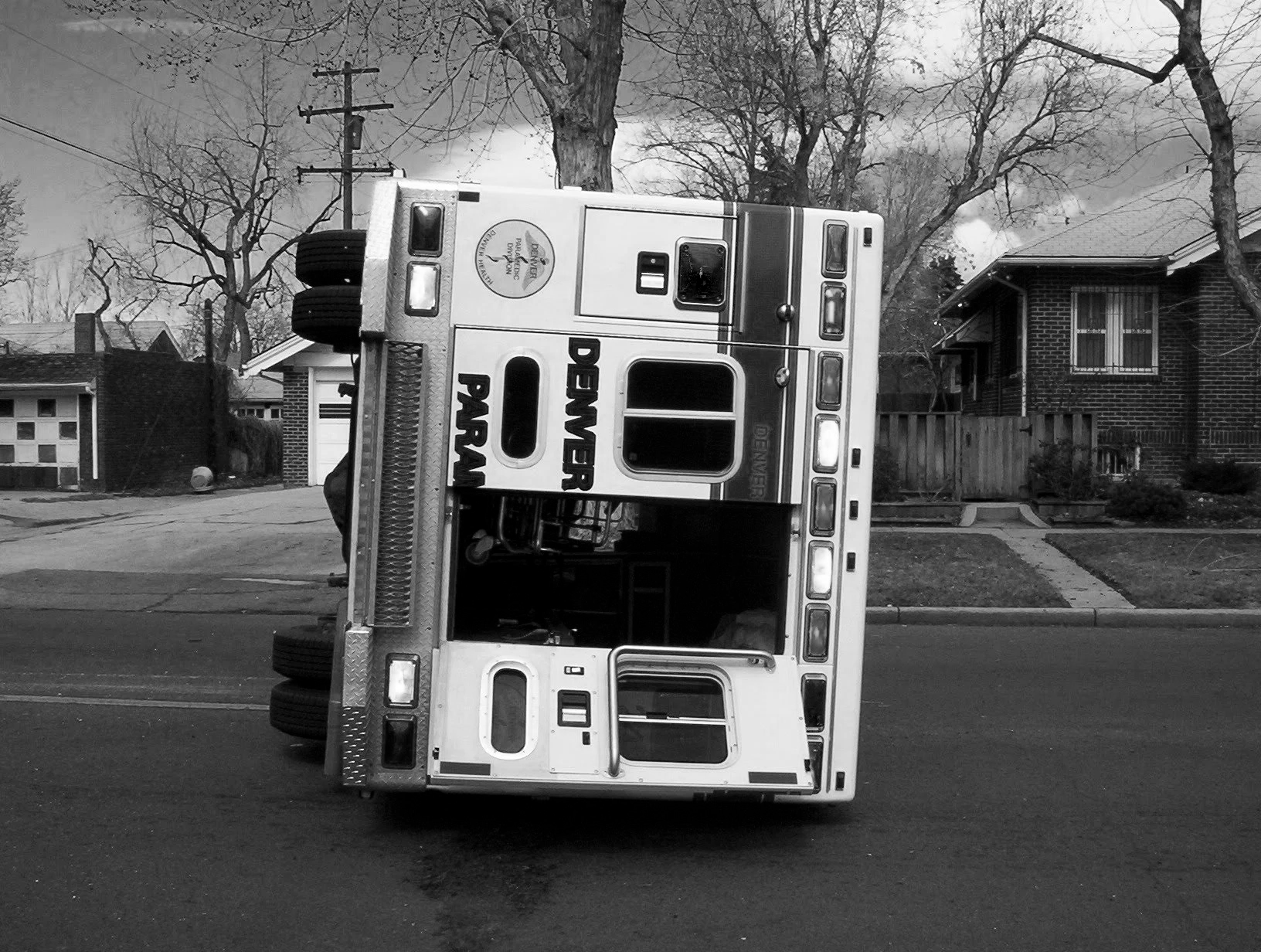
“Looks like the Knife and Gun Club are having another meeting.”
By the late-1980s, the emergency department at Denver General Hospital had earned a streetwise nickname that stuck: “The Knife and Gun Club.” On any given Friday or Saturday night, the waiting room felt more like a forward aid station than an urban ER, stacked with stabbing victims, GSWs, overdoses, and every species of urban mayhem. The moniker wasn’t born of bravado; it was a pressure-release valve for staff who saw more blunt reality in a single shift than most people see in a lifetime.
The nickname, once whispered with gallows humor among staff, quickly took root in the local vernacular and culture of Denver General. Over time, it became more than slang—it became an identity. A visual emblem even emerged: a graphic featuring a knife, a handgun, and the rod of Asclepius with Serpent, embedded within the six-pointed Star of Life.
They joked that, “We’re here to save your ass, not kiss it.” While never formally issued or sanctioned by the hospital, the nickname floated through the emergency community, shared among medics, doctors, and trauma nurses who had lived it. Today, versions of insignia still circulate online and in alumni circles, symbolizing a time when survival was measured not in policies or press, but in how many people you brought back from the edge.
Contact Ryan.
info@ryanherringtonauthor.com